

 Facebook
 X
 Pinterest
 Copy Link
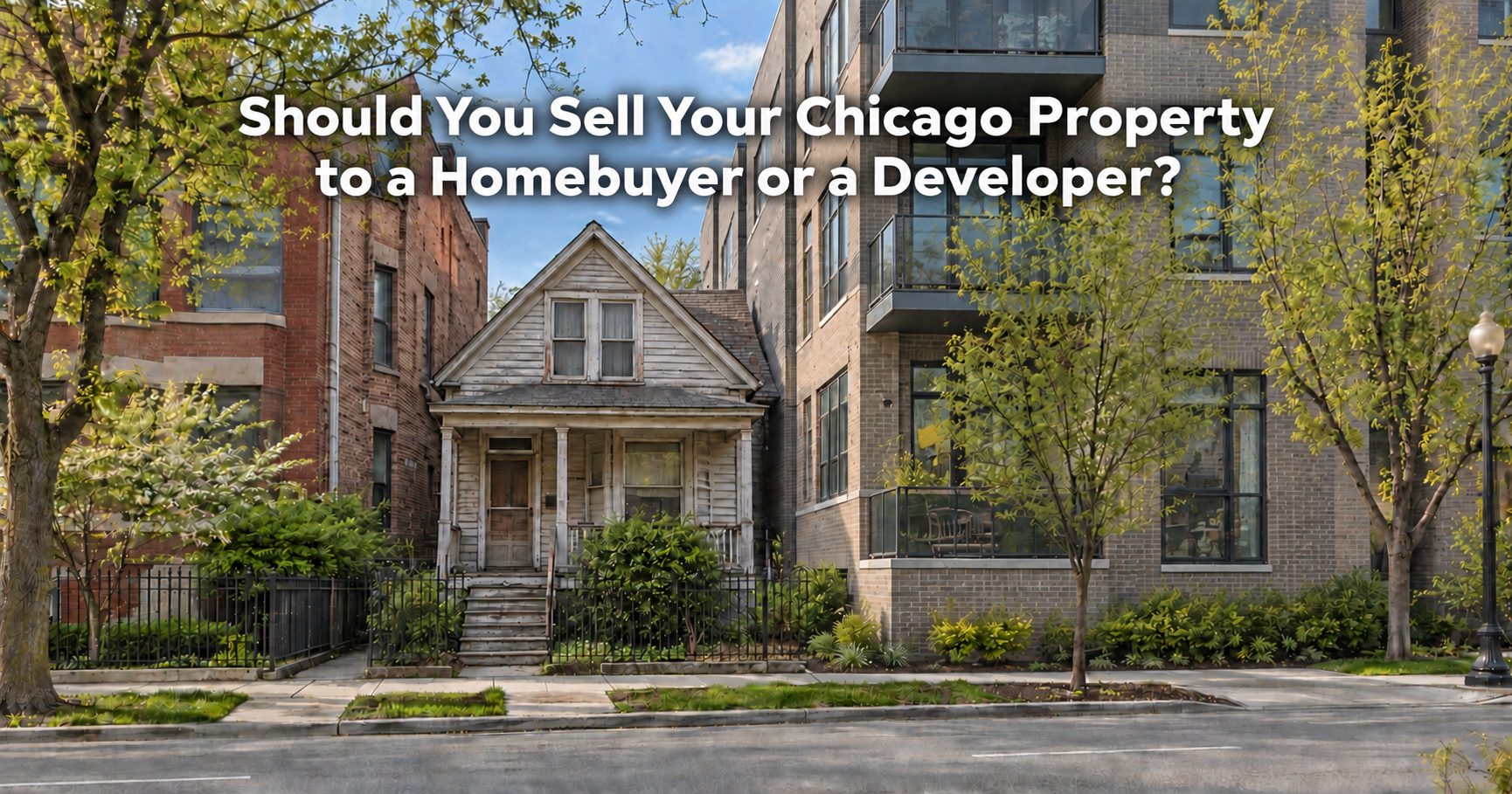
If you own an older Chicago property, you may be wondering whether to keep repairing it, continue renting it, or sell it.
Before making that decision, it is important to understand that your property may have two different values: the value of the existing building and the value of the land.
A homebuyer and a developer will look at the same property very differently.
What Does a Homebuyer See?
A homebuyer usually focuses on the condition of the house.
The buyer considers the kitchen, bathrooms, roof, plumbing, electrical system, foundation, and the amount of work required after closing.
If the property needs major repairs, the buyer may reduce the offer or decide not to purchase it.
The owner may also need to spend money preparing the house for sale, making repairs, cleaning it, and negotiating inspection issues.
What Does a Developer See?
A developer may be less concerned about the condition of the house.
The developer is more likely to examine:
- the size and dimensions of the lot;
- street frontage and alley access;
- current zoning;
- nearby construction;
- neighboring parcels;
- what may potentially be built on the property.
A small or outdated house may have limited value to a homebuyer but still occupy land that is attractive to a builder.
This is especially important for older properties located near new residential construction or along major Chicago corridors such as Ashland Avenue.
Why Consider Selling?
Keeping an older property can become increasingly expensive.
Property taxes, insurance, repairs, vacancies, maintenance, and major building systems can reduce the income the property produces. A roof, foundation, plumbing system, or electrical upgrade may require a substantial investment.
Selling may allow an owner to:
- avoid future repair and maintenance costs;
- stop paying taxes and insurance on an underperforming property;
- sell the property in its present condition;
- avoid preparing the house for a traditional homebuyer;
- convert an aging property into money that can be used elsewhere;
- simplify the management of inherited or family-owned real estate.
You do not have to wait until the building becomes a serious financial problem. It may be better to understand its market value while developers are still active in the area.
Compare the Entire Offer
A developer does not automatically offer more than a homebuyer. The best buyer depends on the property.
Before accepting an offer, compare:
- the purchase price;
- repair or credit requests;
- financing;
- inspection and development contingencies;
- closing time;
- earnest money;
- estimated net proceeds.
The goal is not simply to find a buyer. It is to determine which type of buyer sees the greatest value in your property and offers the strongest overall terms.
Find Out What Your Property May Be Worth
If you own an older house, rental property, or potential teardown in Chicago, do not assume its value is based only on the condition of the building.
The lot, location, frontage, zoning, and surrounding development may be equally important.
I am Natalie Novikova, an Illinois Licensed Real Estate Broker with CENTURY 21 Circle. I work with owners of older properties, vacant land, and potential redevelopment sites.
Send me the property address. I can review recent sales, nearby development, and the factors that may affect whether your property should be marketed to a homebuyer, an investor, or a developer.
You do not need to be ready to sell. The first step is understanding what you own and what options are available.
Natalie Novikova
Illinois Licensed Real Estate Broker
CENTURY 21 Circle
224-517-5507


